Two dreamy Indian Ocean destinations, one hard choice: which island paradise matches your budget, travel style and holiday wishes? That’s the question at the heart of the Maldives vs Seychelles debate, and it’s trickier than it looks. Both promise turquoise water, white sand and serious romance, yet they deliver two very different kinds of trip — and picking the wrong one can mean paying a premium for a holiday that doesn’t quite fit you.
In this guide, we break down the core difference between the two at a glance, then compare weather and the best time to go, beaches, diving and marine life, and what each destination really costs. We also cover getting there and getting around, from seaplane transfers to island-hopping options, and match each destination to specific travel styles. By the final word, you’ll know exactly which one fits you — and how far ahead to book.
Maldives vs Seychelles: The Core Difference at a Glance
The core difference between these two Indian Ocean destinations comes down to one question: do you want to stay put or move around? The Maldives is built around a one-resort-per-island model. You fly in, transfer to your own private island, and rarely leave it until your flight home. The Seychelles is the opposite: an archipelago of 115 islands where hopping between them is half the experience.
The Maldives: one island, one resort, total seclusion
The Maldives spreads across about 1,190 coral islands grouped into 26 atolls, and the landscape is exactly what you’d expect from a coral nation: flat, low-lying, ringed by shallow turquoise lagoons. There are no mountains, no hiking trails and very little in the way of local life visible from your deck. What you get instead is the famous overwater villa, a house reef at your doorstep, and a level of privacy that few places on earth can match.
That seclusion is the whole point. Many resorts occupy an entire island, so your “neighborhood” is a circle of sand and sea. It’s an ideal setup for honeymoons, anniversaries and anyone who wants to switch off completely.
The Seychelles: granite peaks, Creole culture and island hopping
The Seychelles feels entirely different. Its islands rise from the sea in dramatic granite formations, with lush green peaks, jungle-covered hills and beaches framed by sculpted boulders. You can hike a trail in the morning, swim at a postcard beach in the afternoon and finish with grilled fish at a Creole restaurant in the evening.
Because the islands are close together, island hopping is easy and rewarding. Base yourself on Mahe, spend a night or two on Praslin, take a day trip to La Digue, and you’ll experience three distinct islands in one trip. Local life, markets and Creole food are part of the experience rather than something hidden behind resort gates.
The quick verdict: if your dream trip is pure romance, diving and doing absolutely nothing in total privacy, the Maldives is built for you. If you want variety — scenery, culture, exploration and multiple beaches in one vacation — the Seychelles fits better.
Weather and the Best Time to Go
Both destinations sit close to the equator, so you can count on warm, tropical weather whenever you go. Sea temperatures hover around 27-30°C year-round in both the Maldives and Seychelles, which means swimming, snorkeling and diving are on the menu in any month. The real difference lies in rainfall and wind, and those two factors should drive when you book.
Maldives: dry season vs value season
The Maldives dry season runs from November to April, bringing the sunniest skies and calmest seas. This is peak season, so expect the highest rates and book well ahead. From May to October, the wet season brings more rain and cloud cover, but it also comes with a silver lining: resort rates often drop by 20-40%. If your schedule is flexible and you can live with the chance of an afternoon shower, the value season can be a smart way to stay at a top resort for less.
Seychelles: catching the calm windows
The Seychelles sweet spots are April-May and October-November, when the trade winds change direction and the seas are at their calmest. These shoulder windows are ideal for swimming, snorkeling and glassy-water beach photos. Outside those windows, the southeast trade winds from December to March and June to September can stir up seaweed and rougher water on some coasts, depending on which side of the island you’re staying on. It rarely ruins a trip, but if calm swimming is your priority, aim for the transition months.
One practical tip: whichever destination you choose, check the typical weather pattern for your exact travel dates before locking in dates, since conditions can shift from year to year.
Beaches, Diving and Marine Life
If your dream trip revolves around what’s under the water, the Maldives is hard to beat. Most resorts sit on private islands surrounded by their own house reef, meaning you can often step off the beach and be snorkeling over coral within minutes. Baa Atoll, a UNESCO biosphere reserve, is famous for seasonal gatherings of manta rays and whale sharks, typically seen between June and November. Many resorts run guided snorkel and dive trips to these hotspots, and some overwater villas let you watch reef sharks cruise by from your deck.
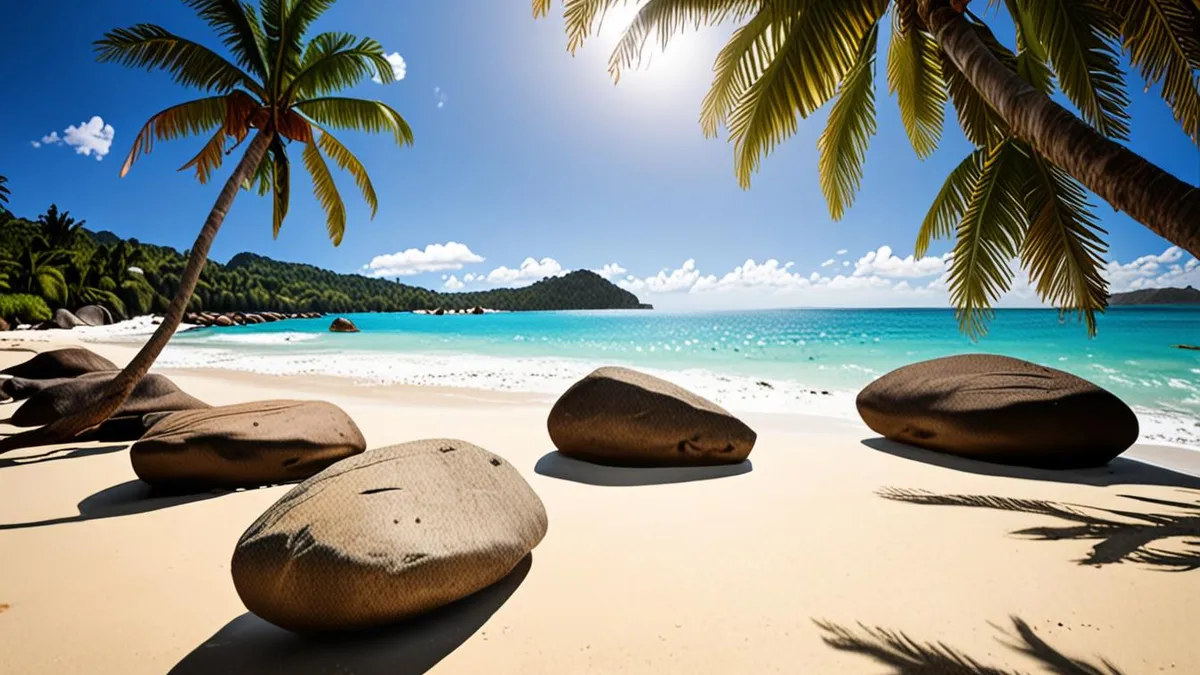
The Seychelles offers a different kind of beach magic. Instead of coral sand meeting turquoise lagoons, you get dramatic granite boulders sculpted into postcard shapes, with Anse Source d’Argent on La Digue as the most photographed example. The islands are also home to giant tortoises you can see roaming freely on places like Curieuse and some resort islands. Sea turtles nest on Seychelles beaches too, with hatching seasons that vary by island, so ask locally if you want to time a visit.
Water clarity is where the two really differ. The Maldives typically offers visibility of 20-30 meters, which is why it’s a world-class diving destination. In the Seychelles, visibility varies more by season and by which coast you’re on, so plan dives around conditions rather than expecting consistent clarity.
- House reef snorkeling: In the Maldives, ask your resort for a reef map before booking — some house reefs have easy entry points and drop-offs just offshore, while others require a short boat ride.
- Turtle etiquette: In the Seychelles, keep your distance from nesting turtles and hatchlings, avoid flash photography at night, and follow marked paths over nesting beaches.
- Manta season logistics: If swimming with mantas in Baa Atoll is your priority, book well ahead — properties near Hanifaru Bay fill up quickly during peak sightings.
- Current awareness: Channel dives in the Maldives can have strong currents; beginners should request drift-dive briefings or choose sheltered lagoon sites instead.
Budget: What Each Destination Really Costs
The Maldives has a reputation for being expensive, and for the classic overwater villa experience, that reputation is largely deserved. Expect nightly rates of roughly $400 to $2,000 or more, depending on the resort, the villa category and the season. On top of that, most resorts charge for the transfer itself, and seaplane transfers often run $300 to $600 per person round trip. That means a couple can easily add a significant amount to the bill before they have even checked in.
Seychelles is more forgiving. Its resorts typically range from about $300 to $1,500 per night, but the real difference is what sits below that tier. Guesthouses and self-catering options start from around $120 per night, which opens the door to travelers who want the same beaches without a five-star price tag. If your group includes a mix of budgets, this flexibility matters a lot.
Food: all-inclusive vs eating out
Food works differently in each place. Many Maldives resorts are all-inclusive or half-board, so meals are bundled into your rate and you rarely leave the island to eat. It is convenient, but you pay for that convenience. In Seychelles, you can eat at local Creole restaurants for roughly $10 to $25 a meal, which keeps costs down and lets you actually taste the destination. Grilled fish, curries and fresh fruit taste better when they come with local conversation.
One practical tip: in the Maldives, compare the total price including transfers and meal plans, not just the room rate. In Seychelles, budget separately for car rental or ferry tickets, since those are not usually included. Prices shift with the seasons, so check current rates before booking rather than relying on older figures.
Getting There and Getting Around
Both destinations are long-haul flights followed by a transfer, but the experience on the ground feels completely different. The Maldives funnels you through one airport and hands you over to your resort, while Seychelles gives you an archipelago of 115 islands to piece together yourself. That single difference shapes your entire trip: in the Maldives, logistics are handled for you from the moment you land, while in Seychelles you stay in control of where you go and when. Neither approach is better, but knowing what to expect helps you plan realistically — especially around transfer times, booking windows and how much independent travel you actually enjoy. Here is how each journey typically works, step by step.
- Fly into Male for the Maldives. Nearly all international arrivals land at Male, the country’s main gateway. From there, your resort arranges either a seaplane or speedboat transfer, usually taking between 15 and 60 minutes depending on how far out your island sits. Confirm your transfer details when booking, as flights are often timed to connect with them.
- Let the resort handle the rest. Most Maldives resorts coordinate the entire transfer, often meeting you at the airport and managing your luggage. Once you arrive at your island, you generally stay there for the whole trip, with everything from meals to activities on-site.
- Land on Mahe for Seychelles. Seychelles’ main international airport is on Mahe, the largest island. This is where most trips begin, and it is worth spending a day or two here before moving on.
- Hop to Praslin or La Digue. Short domestic flights to Praslin take around 15 minutes, while ferries connect Mahe, Praslin and La Digue, with some crossings taking up to 2 hours. Book ferry tickets ahead in busy periods, as they can sell out.
- Rent a car or bicycle in Seychelles. Roads on Mahe and Praslin make car rental genuinely useful, and La Digue is best explored by bicycle. This freedom to roam is one of Seychelles’ biggest advantages over a single-island Maldives stay.
In short, the Maldives offers a frictionless, resort-managed arrival where you barely think about logistics after landing — you step off the plane, climb aboard a boat or seaplane, and let someone else take over. Seychelles asks a little more of you in planning: comparing ferry schedules, deciding which islands deserve more nights and arranging your own transport between them. But that effort is rewarded with real independence — the ability to wake up on a different island, drive to a new beach each morning and set your own pace without a resort dictating your schedule. If you want zero decisions and a seamless arrival, choose the Maldives; if you want the flexibility to explore and change plans on a whim, choose Seychelles. Either way, book early for high-season travel, since the best rooms and transfers fill up well in advance.
Which One Fits Your Travel Style
The honest answer to “which is better” is that neither is, universally. Each destination suits a particular kind of traveler, and choosing the wrong one is the most common and most expensive mistake people make. Think honestly about what you actually want from your days: total stillness, or new scenery every morning? There is no wrong answer, but there is a wrong destination for your answer.
If you picture yourself barely leaving your villa, the Maldives is the stronger match. If you imagine exploring, the answer shifts. Here is how the two destinations break down by travel style:
- Honeymooners wanting total privacy: A Maldives overwater villa is hard to beat. Many resorts cap occupancy, so you can go days without seeing another guest, and some offer private decks with direct lagoon access for sunrise swims.
- Families and explorers: Seychelles wins for variety, culture and hiking. Kids can spot giant tortoises, parents can tackle marked trails in the Morne Seychellois hills, and every day can end somewhere different.
- Divers and surfers chasing big marine encounters: The Maldives is the pick. Channel dives with manta rays and whale sharks, plus surf breaks reachable by boat, make it a serious destination for water sports rather than just floating.
- Beach photographers and food lovers: Seychelles takes it. The granite-boulder beaches are among the most photographed in the world, and Creole cooking gives you restaurants and markets to explore rather than a single resort kitchen.
A useful rule of thumb: the more your ideal trip revolves around a single place done exceptionally well, the more the Maldives fits. The more it revolves around movement, discovery and local life, the more Seychelles fits. Some couples even split a longer trip between the two, though that adds flight time and cost, so it works best for stays of ten days or more.
One last practical note: whichever you choose, book early. High-season overwater villas in the Maldives typically need 6-9 months of lead time, while Seychelles beach resorts usually require around 4-6 months. Last-minute deals exist, but they are far less reliable in the Indian Ocean than in many other regions.
The Final Word on Maldives vs Seychelles
So, which paradise is yours? If your dream trip is total seclusion, stepping off your villa deck onto a house reef, and world-class diving, the Maldives is the clear winner. If you’d rather mix beach days with hiking, island hopping, Creole food and more flexible budgets, the Seychelles fits better.
Timing matters more than anything else. Match your travel months to each destination’s season window, and you’ll get the best weather and value. Whichever you pick, both deliver a world-class Indian Ocean resort stay — the right choice is simply the one that matches your style. Tell us in the comments which one you’d choose, or share this article with someone planning their escape.