You love the idea of falling asleep to crickets and waking up to birdsong, but the reality of camping gives you pause. Thin tents, cold nights, shared bathroom blocks a muddy walk away — it all adds up to why you keep booking hotels instead. That is exactly the problem glamping solves.
Glamping, short for glamorous camping, gives you the outdoors without the gear or the discomfort: real beds, proper heating, private bathrooms and often meals, all inside furnished tents, domes and treehouses set in beautiful landscapes. In this guide, you will learn what glamping actually is, the main types of accommodation and what to expect inside them, what it typically costs, when to go and how far ahead to book, how to choose your first site, and what to pack. By the end, you will know exactly how to plan a first trip that feels closer to a boutique hotel stay than a survival exercise.
What Is Glamping, Exactly?
Glamping means glamorous camping, and the name is fairly accurate. Instead of pitching a tent yourself, you arrive at a fully furnished structure — a large canvas tent, a dome, a treehouse or a cabin — complete with real beds, lighting and, in many cases, an en-suite bathroom. You get the sounds and smells of the outdoors with a level of comfort that looks a lot more like a hotel room than a campsite.
How it differs from traditional camping
The differences show up in the details. Traditional camping asks you to bring and manage almost everything yourself: your shelter, your bedding, your cooking setup. Glamping flips that. Quality linens are already on the bed, heating or a wood stove keeps the space warm, and the bathroom is usually private. At the luxury end, meals are prepared for you and housekeeping keeps the unit fresh during your stay, so the experience runs much closer to a small boutique hotel that happens to sit in a field or forest.
The structures themselves
Glamping is not one type of accommodation. Safari tents, yurts, geodesic domes, A-frame cabins and eco-pods are all common, and each offers a different level of immersion in nature. A safari tent keeps you close to the sounds of the night through its canvas walls, while a dome with panoramic windows puts the landscape on display from bed. Choosing the right structure is a big part of planning a first trip that feels comfortable rather than experimental.
Types of Glamping Accommodation and What to Expect Inside
Not all glamping accommodation is the same, and the type you pick shapes your whole trip. For most first-timers, safari tents and yurts are the safest starting point. They offer classic canvas charm, but with solid floors, proper furniture and often a wood stove, so you get the atmosphere of camping without the draftiness of a tent you pitch yourself. Yurts add a round, cozy layout that many people find surprisingly roomy.
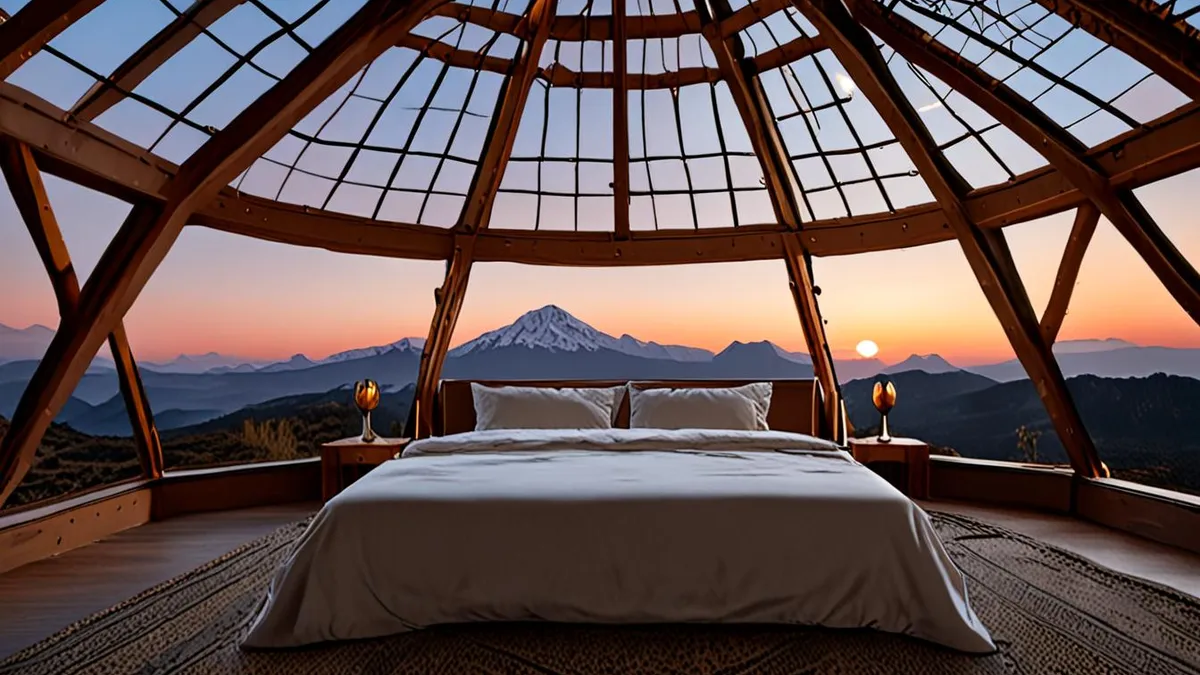
If views and privacy matter more to you than tradition, geodesic domes and treehouses are the showstoppers. Domes often feature panoramic windows that frame the landscape from the bed, while treehouses lift you into the canopy with real spa-style bathrooms below. For a sense of how far treehouse design has come, this treehouse stay in Okinawa shows how refined these structures can get.
Whatever you choose, most units sleep 2–4 guests, with family setups accommodating up to 6. At the luxury end, expect real beds with proper mattresses, heating and hot water as standard.
- Sleeping setup: many safari tents and yurts use a mix of a proper double bed plus fold-out or bunk options, so check the exact bed configuration before booking rather than assuming everyone gets a real mattress.
- Power and lighting: units are typically wired for electricity or solar lighting, but some eco-focused sites limit outlets — worth knowing if you travel with several devices.
- Deck space: safari tents and domes often come with a private deck or veranda with seating, which effectively doubles your living space in good weather.
- Kitchen or catering: some units include a small kitchenette, while others rely on an on-site restaurant or breakfast delivery — confirm which model your site uses.
How Much Does Glamping Cost?
Glamping covers a wide price range, but you can plan around some useful ballparks. Most quality sites charge roughly $150–$600 per night. Above that tier, ultra-luxury safari-style camps — the kind with private plunge pools, butler service and game drives included — can exceed $1,000 per night. The good news for beginners is that you do not need to go near the top of the range to get a genuinely comfortable experience.
What drives the price up
Location is the biggest factor: a tent overlooking a famous national park costs far more than the same structure an hour from a mid-sized city. Season matters just as much, with peak dates commanding the highest rates. Inside the rate itself, a private en-suite bathroom, chef-prepared catering and bundled activities such as guided hikes or kayak rentals all push the nightly price upward. A basic unit with shared facilities and self-catering sits at the low end; a heated dome with a spa bathroom and meals included sits at the high end.
How to pay less without suffering
Shoulder-season dates can cut 20–40% off peak rates while still offering comfortable weather. Booking midweek instead of a weekend also helps, since weekends carry the highest demand. Check whether activities are included or charged separately, because a seemingly expensive rate with meals and excursions bundled in can work out cheaper than a bare-bones rate plus add-ons.
When to Go and How Far Ahead to Book
Timing makes a bigger difference to a glamping trip than almost any other decision you’ll make during planning. Canvas walls and panoramic windows are wonderful when the weather cooperates, and considerably less fun when it doesn’t. Unlike a hotel, where a rainy day is a minor inconvenience, a tent or dome puts you right at the mercy of the elements, so choosing your dates carefully matters. A little planning around seasons and booking windows goes a long way toward making your first trip a success.
- Pick the right season for your region. In Europe and North America, aim for May–September, when nights are mild and most sites are fully operational. In Southeast Asia, the sweet spot runs October–April, when humidity and rainfall are at their friendliest.
- Reserve early for peak dates. For summer weekends, book 3–6 months ahead. The most sought-after sites fill their calendar surprisingly fast, especially around holidays and long weekends.
- Plan even further ahead for iconic destinations. Legendary spots like Patagonia typically need 6–12 months of lead time. If a stay under the stars at the edge of Torres del Paine is on your list, look at eco-friendly dome accommodation in Patagonia well before you book flights.
- Check minimum-stay rules before you commit. Many sites require 2–3 nights on weekends and in high season. Factor this into your budget and schedule from the start, since it can affect which dates actually work for you.
One last tip: if your dates are flexible, ask the site directly about quieter periods within peak season. Early June or late September often combines good weather with more availability and a calmer atmosphere, since school holidays haven’t started or have already ended. A quick email before booking can save you both money and crowds, and site owners are usually happy to point you toward the sweet spots on their calendar.
How to Choose Your First Glamping Site
Your first glamping trip should feel like a treat, not a test of endurance. That means being honest with yourself about what you actually need to be comfortable before you fall in love with a photo of a tent on a clifftop. Start with your comfort floor, then work outward from there.
For most beginners, three features matter most: a private bathroom, reliable heating, and some form of catering or an on-site restaurant. If skipping any of these would turn the trip into work, don’t compromise on your first outing. There’s plenty of time to rough it later, if you ever want to.
Location matters more than you might expect, too. A site within 1–2 hours of an airport or a major city keeps your first trip simple: shorter transfers, easier arrival times and a backup plan if weather or flights go sideways.
- Read reviews from the last few months, not years ago. Sites change owners, add units and let maintenance slip, so recent feedback tells you far more about current conditions.
- Look specifically for comments on rain and cold snaps. A tent that leaked during one stormy week, or a dome with a heater that struggled, will usually show up in guest reviews.
- Check what reviewers say about noise. Proximity to a road, a busy communal fire pit or a neighboring family area can change the feel of a “peaceful” escape.
- Scan photos posted by guests, not just official ones. These often reveal the real spacing between units and the true state of decks, paths and shared facilities.
Ten minutes of this homework usually separates a magical first trip from a disappointing one. Do it before you book, not after.
What to Pack for a Glamping Trip
Packing for glamping is refreshingly light compared to traditional camping, but a few items make a real difference. The biggest surprise for first-timers is temperature: canvas and dome structures cool down quickly at night, even on warm summer evenings. That canvas that feels so charming at sunset can turn chilly by midnight, so pack as if the evening will be ten degrees cooler than the afternoon. A thermos of hot tea or cocoa also goes a long way when you want to sit outside and stargaze.
Think in layers. A t-shirt for the day, a fleece for the evening and a warm jacket for sitting outside after dark covers most situations. Comfortable closed-toe shoes matter too, since you’ll likely be walking on gravel paths or grass between your unit and the main lodge or dining area. If rain is possible, a light waterproof layer is worth the small amount of space it takes in your bag, and a small daypack helps on short walks or excursions.
- A headlamp or small flashlight. Many sites use low-level lighting to preserve the atmosphere and the night sky, so paths between units can be genuinely dark.
- A reusable water bottle. You’ll often walk a fair distance to a dining tent or water station, and having your own bottle saves repeated trips.
- Bug spray and sunscreen. Even the most luxurious canvas suite is still outdoors, and mosquito-free evenings are never a guarantee in forest or lakeside settings.
- A book or downloaded entertainment. Wi-Fi at remote sites is often slow or limited to communal areas, so plan an offline evening option.
Here’s what you can usually leave at home: linens, towels and toiletries. Most luxury glamping sites provide all three, often at a standard closer to a boutique hotel than a campsite. Many also supply extras like robes, board games or firewood, so ask when you book rather than doubling up. Check your site’s packing list before you go, and pack light.
Your First Night Under Canvas, Minus the Compromises
If you have been putting off camping because of thin tents, cold nights and the lack of a bathroom, glamping removes every one of those objections. You still get the setting of a wild night outdoors, but with a real bed, heating and, at the luxury end, a private en-suite bathroom and chef-prepared meals waiting for you. In other words, the parts of camping that usually put people off are the parts someone else has already handled for you.
The practical side is simple: budget around $150–$600 per night, book 3–6 months ahead for peak season weekends, and choose a structure that matches your comfort level, whether that is a safari tent, a yurt or a geodesic dome. With the right site and a smart packing list, your first glamping trip should feel less like roughing it and more like checking into a well-run hotel that happens to sit in the middle of nature. Have you tried glamping yet, or are you planning your first trip? Leave a comment or share this article with a friend who loves hotels but keeps eyeing the outdoors.